
Streamlining SOX Compliance Excellence: Optimized SOX Program
Updated: Feb 17, 2025

Discover how a leading brand in mobile gaming industry, transformed its SOX compliance program with a strategic approach that enhanced efficiency, reduced stress and delivered cost-effective results. By leveraging best practices in program management, they achieved timely submissions and seamless compliance with South Korean financial regulations.
CATEGORY: COMPLIANCE
JUNE 2024
As a publicly traded entity, mandated by Sarbanes-Oxley Act (SOX) stringent internal controls and financial reporting processes. The company manages its SOX compliance program in-house, involving internal business units, a compliance team, and external audit advisors.
Problem/Goal:
They faced significant challenges in managing their compliance program, including:
Inefficient Processes: Relying on spreadsheets, word processing tools, and network drives for file management resulted in disorganized workflows
Overburdened Teams: Internal teams faced frequent last-minute evidence requests, leading to high stress.
Cost Overruns: Ineffective vendor management led to increased costs for audit advisory services.
The key objectives were:
Improve collaboration and efficiency.
Ensure on-time reporting to the parent company.
Control vendor costs while maintaining quality.
Solution:
To address these challenges, we conducted a comprehensive analysis of their compliance processes using the People, Process, and Tools framework:
People:
Delivered targeted training to enhance team capabilities and understanding of compliance.
Established a clear RACI (Responsible, Accountable, Consulted, Informed) framework to clarify roles and responsibilities.
Process:
Developed a structured program plan with clear milestones and timelines.
Implemented standardized workflows for evidence gathering and reporting.
Implemented a process to monitor and manage the performance of the audit advisor, ensuring cost and quality control.
Tools:
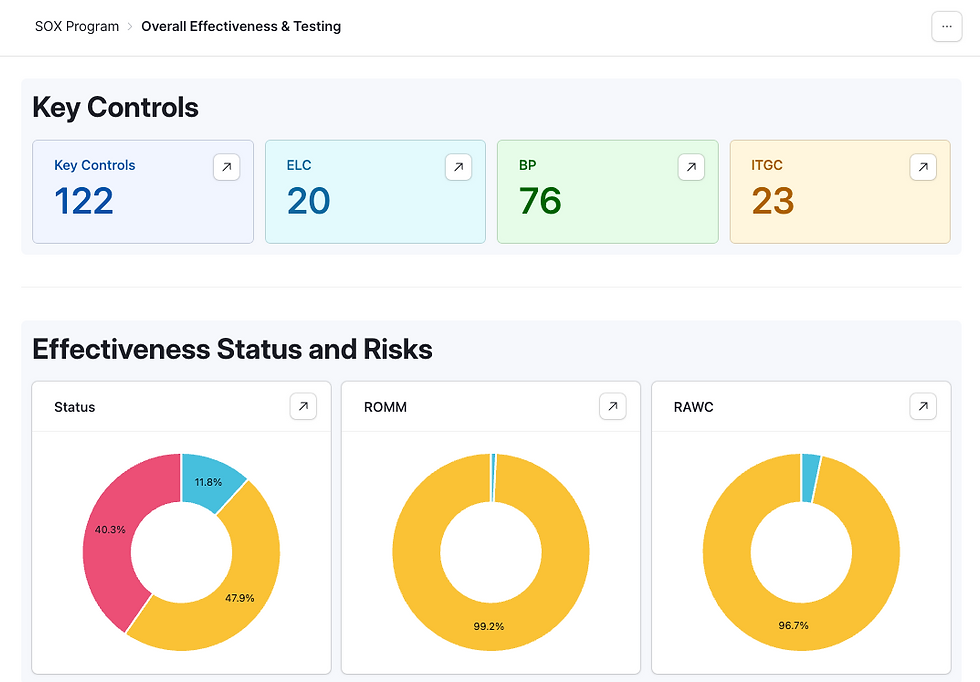
Designed dashboards for near-real-time monitoring of program progress and key performance indicators.
Recommended automation solutions to minimize manual tasks and improve efficiency.
Results:
The implementation of these optimized practices led to measurable improvements within three months:
Timely Submission: Successfully met all reporting deadlines to its parent company.
Team Efficiency: Improved planning and streamlined workflows reduced last-minute workload and stress for internal teams.
Cost Efficiency: Improved vendor oversight kept audit advisory expenses within budget.

Conclusion
This experience demonstrates the power of strategic program management in navigating complex compliance landscapes. They achieved a more efficient and effective SOX compliance program by addressing inefficiencies and adopting best practices. This case study serves as a blueprint for organizations seeking to optimize their regulatory processes while maintaining operational efficiency.



Comments