
Digital Transformation: A Guide to Transforming Business Processes with Digital Tools - from Problem to Platform Implementation
Updated: Jan 30, 2025

Introduction: Embracing the Future with Confidence
In today’s rapidly evolving digital landscape, the only fear an organization should have is the fear of inaction. Companies that resist change risk falling behind, while those that embrace digital transformation unlock new opportunities for growth, efficiency, and innovation.
Digital transformation begins with a mindset shift—setting aside preconceived notions and embracing the power of change. It’s about adopting technology and leveraging it to achieve operational excellence. Leaders who successfully guide their organizations through transformation believe in its power and articulate a clear vision for the future.
This process requires:
Understanding available tools and technologies.
Identifying innovative ways to enhance business outcomes.
Assembling the right people and processes to support change.
Digital transformation solutions span multiple domains, including Process re-engineering, Cloud technologies, Artificial Intelligence, Customer Experience solutions, IoT integrations, and Cybersecurity. This guide outlines a structured approach for organizations to address business process challenges, leveraging the People > Process > Tools framework to adopt effective digital solutions.
Why Digital Transformation Matters
Transformation is not just about automating manual processes; it’s about strategically aligning technology with organizational goals. Ill-conceived solutions often introduce inefficiencies instead of resolving existing problems.
Organizations must:
Avoid adopting platforms without thoroughly analyzing their needs.
Ensure that chosen solutions align with their unique requirements.
Invest in training and change management to facilitate smooth adoption.
A robust, streamlined approach ensures measurable and sustainable outcomes. This guide outlines the digital transformation journey in three comprehensive stages: Initiation, Selection, and Implementation.
The Three Stages of Digital Transformation
The transformation journey can be divided into three distinct stages:

Stage One: Initiation
Assemble the Project Team
Create a team of internal members and clearly define roles and responsibilities using a RACI matrix for each person involved in the process.
Understand the Need
Start by identifying the root cause of the business challenge. Before exploring tools, it’s critical to understand the true problem. Use the People > Process > Tools framework to assess the current state:

This framework helps identify the needs and challenges within your organization by focusing on the interplay between people, processes, and tools. With this foundation established, we can move forward to clearly define objectives, articulate a compelling business case, and conduct a thorough requirements analysis.
Set Objectives and Key Results (OKRs):
Define measurable goals.
Identify the personas the transformation affects and set specific key results for each role.
Prepare the Business Case: Create a compelling business case to secure executive buy-in. Include
Vision: Describe the long-term benefits.
Challenges: Highlight current pain points and their impact.
Cost Analysis: Estimate potential savings compared to the current state.
Transformation Team: Assemble a dedicated team to lead the initiative.
Conduct Business Requirements Analysis:
Collaborate with relevant teams to identify their needs.
Leverage surveys, interviews, and workshops to gather insights.
Document functional and non-functional requirements, prioritizing them based on impact and urgency.
Stage Two: Platform Selection
Assemble the Selection Team
Form a cross-functional team of key stakeholders involved in the process to ensure diverse perspectives.
Define Platform Assessment Criteria
Develop clear criteria to evaluate potential platforms, including:
Functional alignment with business requirements.
Vendor support and reliability.
Scalability and integration capabilities.
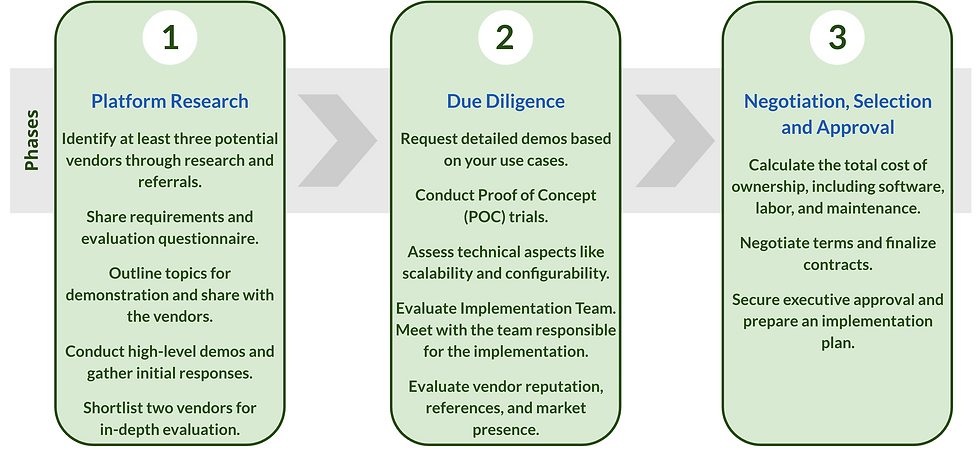
Follow a Structured Platform Selection Framework
Prepare success criteria and vendor questionnaires.
Conduct platform demonstrations and gather team feedback.
Evaluate platforms using weighted scoring against the criteria.
Stage Three: Implementation
Assemble the Implementation Team
Once the platform is selected, create a team comprising internal members and vendor representatives. Clearly define roles and responsibilities using a RACI matrix for each person involved in the implementation process.
Plan and Deploy
Once the team is established, focus on planning and deployment strategy:
Implementation Plan:
Define timelines, milestones, and roles.
Prepare a rollback plan as a contingency strategy for business continuity.
Conduct a kickoff meeting with stakeholders and vendors.
Configuration and Testing:
Configure the platform to align with business requirements.
Perform functional and user acceptance testing (UAT).
Change Management:
Develop training materials and provide comprehensive training to users.
Communicate changes effectively throughout the rollout.
Rollout in Stages
Adopt a phased approach to minimize risk:
Pre-launch: Test in a sandbox environment with key stakeholders.
Soft Launch: Deploy to a limited group of users, gather feedback, and adjust.
Full Launch: Roll out organization-wide.
Monitor and Optimize
After go-live:
Monitor platform performance and address issues promptly.
Collect feedback for continuous improvement.
Conduct a post-implementation review to document lessons learned.
Conclusion: Leading the Change
Digital transformation is a journey that requires vision, collaboration, and resilience. By following the steps and frameworks outlined in this guide, I hope your organization can confidently approach digital transformation projects, ensuring smooth and effective execution.
Key Takeaways:
Break down silos to foster collaboration.
Equip teams to adapt and thrive amidst change.
Rely on internal champions to drive cultural shifts and share knowledge.
Transformation begins with a single step—and the courage to keep moving forward. Clear communication and strong leadership are essential for achieving sustainable success.
Feel free to reach out if you’d like to discuss your digital transformation challenges or explore tailored solutions. Together, we can navigate the complexities of this journey and position your organization for long-term success.


Comments